OE Number vs Reference Number: How to Check Before Ordering
Auto-parts buying lists often put different kinds of numbers into one column. A buyer may receive an OE number from one supplier, a cross-reference from another and a factory SKU from a third, even when all three quotations appear to describe the same part.
This guide explains the purchasing decision behind those numbers: identify the number role, map it to the correct product record, confirm vehicle and version details, and only then decide whether two quotations are actually comparable.
QUICK ANSWER
A number is a search key, not the final purchase decision.
Primary OE, Alternate OE, Reference / Cross Reference and Factory / SKU numbers can all help locate a product, but they should not be silently treated as the same type of identifier. Before ordering, confirm the number role, exact product identity, vehicle application, position and version.
IN THIS GUIDE
- Four number roles buyers should keep separate
- How one product can carry several valid numbers
- Why different numbers can still lead to the same item
- Why similar numbers can still mean different parts
- How to compare two supplier quotations
- What to do when everything is called an “OEM number”
- Final buyer check before ordering
- Where to verify the exact item
Four number roles buyers should keep separate
Primary OE
The main OE identity stored for the product record.
Alternate OE
Another OE identity associated with the same catalog record.
Reference / Cross Reference
A separate lookup identifier. It can help locate a product but should not automatically be promoted into the Primary OE field.
Factory / SKU
The supplier- or factory-side identifier used to identify the stocked or quoted item. It is not an OE number simply because it appears on a quotation, label or carton.
These roles matter because the same buying request can arrive through different identification systems. One supplier may quote by OE, another by an aftermarket reference and another by its own SKU. The numbers can still map to the same sellable item, but their authority and meaning remain different.
How one product can carry several valid numbers
REAL CATALOG EXAMPLE
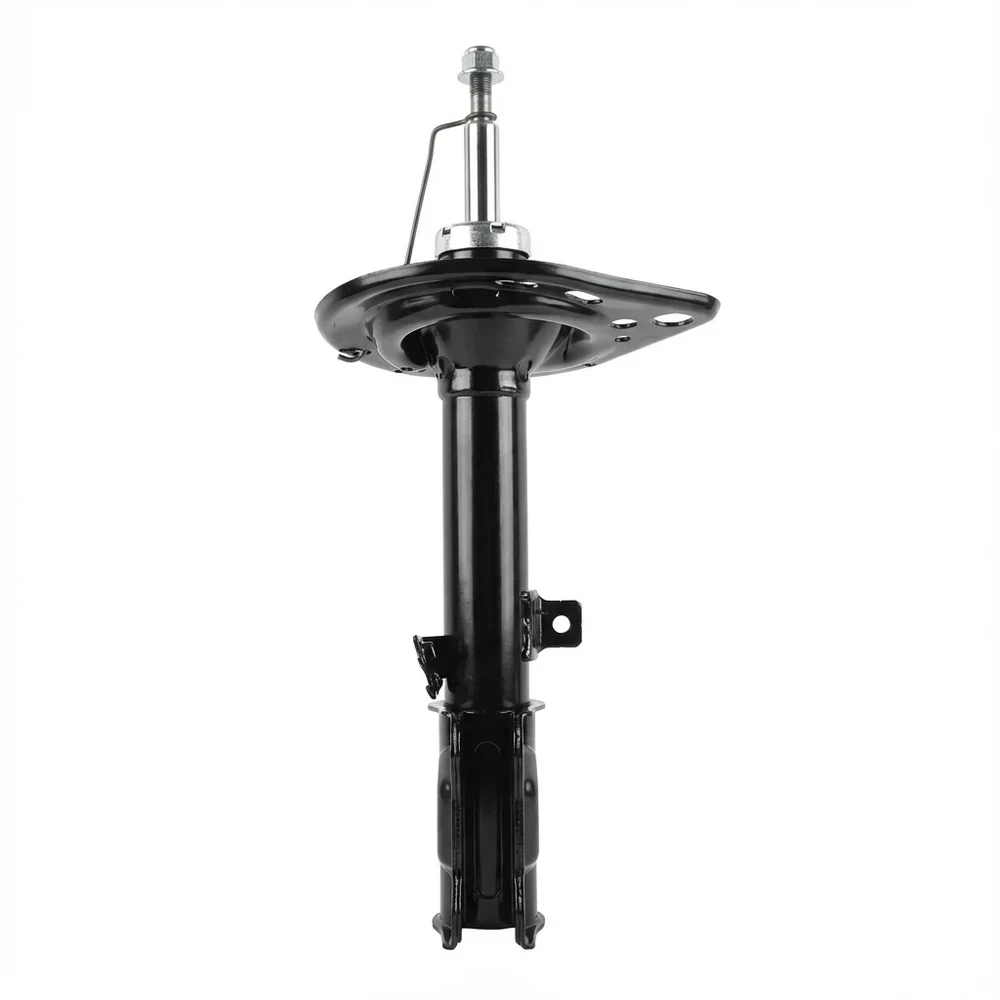
The published Toyota Camry Rear Right Shock Absorber record separates three identifiers for the same sellable item:
| Role | Identifier |
|---|---|
| Primary OE | 4853006400 |
| Reference / Cross Reference | 339025 |
| Factory / SKU | 4215-0337A |
All three numbers are useful. What changes is the question they answer.
The exact product record is Toyota Camry Rear Right Shock Absorber OE 4853006400. The reference and supplier SKU can help locate the same record, but they should remain in their own number roles.
Why different numbers can still lead to the same item
Suppose Supplier A quotes 4853006400 while Supplier B quotes 339025. The quotations should not be rejected simply because the visible numbers differ. First check whether both identifiers map to the same product record, then confirm the vehicle, year range, installation position and product type.
Buyer rule: if the mapping and application fields match, the quotations may describe the same item through different identifier systems. Preserve each number in its proper field rather than rewriting the reference number as OE or the supplier SKU as a verified OE number.
Why similar numbers can still mean different parts
The opposite problem is equally important: numbers that look similar are not proof of interchangeability. A suffix, side designation, model code, product type or version difference can separate two parts that belong to the same family.
VARIANT GUARD
The BMW X5 F15 rear-left complete strut assembly contains Primary OE 33526867865 and 37106875087, Alternate OE 33527850213, 33527856495 and 37106875089, Reference 254830, and Factory / SKU ZSC02139RL. The exact product page is BMW X5 F15 Rear Left Complete Strut Assembly Ref 254830.
If a buyer sends only “254830,” that reference helps find the record, but the final match still depends on the X5 application, rear-left position, product type and supported OE identities.
How to compare two supplier quotations
| What the buyer receives | What to check next | Direct price comparison? |
|---|---|---|
| Same Primary OE | Vehicle, year, position and version | Usually, after configuration is confirmed |
| OE vs Reference / Cross Reference | Confirm both map to the same product record | Not yet |
| Same reference, different vehicle or position | Application and side | No |
| Similar OE with a different suffix | Alternate OE / supersession relationship and version | No |
| Factory / SKU only | Supplier mapping evidence, product identity and application | No |
Compare prices only after you know the two quotations refer to the same product identity. A lower unit price is not useful if one quotation is a shock absorber and the other is a complete strut assembly, or if one is left-side and the other is right-side.
What to do when a supplier calls everything an “OEM number”
Quotation sheets often use broad column labels such as “OEM,” “OE,” “Part No.” or “Reference.” Do not rely on the column heading alone. Preserve the number exactly as supplied and ask what role it represents in that supplier’s system.
| What is unclear | What to preserve or request | Why it matters |
|---|---|---|
| Number role | Keep the original number and ask whether it is Primary OE, Alternate OE, Reference or Factory / SKU | Prevents a supplier code from being promoted into a false OE claim |
| Product mapping | Ask which exact sellable product the number identifies | Separates lookup identity from product identity |
| Application | Vehicle, model code, year and position where relevant | Prevents one number from being applied too broadly |
| Version | Assembly level, connector or other configuration evidence when relevant | Stops similar-looking variants from being treated as interchangeable |
Final buyer check before ordering
- The identifier is preserved exactly as received
- Its number role is known or clearly marked unresolved
- It maps to one exact Product identity
- Vehicle application and installation position match
- Product type / assembly level and version are the same on both quotations
- Any unresolved mapping stays on HOLD instead of being forced into the PO
Where to verify the exact item
OE References
Exact-number lookup and number-role checking.
Vehicle Applications
Model, year and application checking.
Products
The exact sellable product identity.
Related buyer guides
READY FOR A QUOTE?
Send the number you already use
Send the OE or reference number exactly as shown, vehicle details when known, installation position, product type if known, quantity and destination market. If the number role or version is uncertain, include a clear old-unit label or product photo.